

Fiddler for AI Governance, Risk Management, and Compliance (GRC)









Enterprise Oversight and Compliance for Agents and Predictive Applications
As AI advances, regulations such as SR 26-2, HIPAA, and NAIC, and policies such as the EU AI Act, the AI Bill of Rights, OMB M-26-04, and the CA AI Bills continue to emerge, enforcing governance, risk, and compliance standards (GRC). These regulations aim to increase trust and transparency in AI systems and protect consumers from harmful or biased outcomes. By implementing unified observability, evals, guardrails, and governance, enterprises can deploy agents and predictive applications at scale with complete audit trails that meet evolving regulatory requirements.

Enterprises Trust Fiddler for AI Governance
Fiddler AI provides centralized governance and oversight for agents and predictive models across the enterprise, with a registry of your agents, enforced guardrails, and the audit evidence needed to meet evolving regulatory requirements.
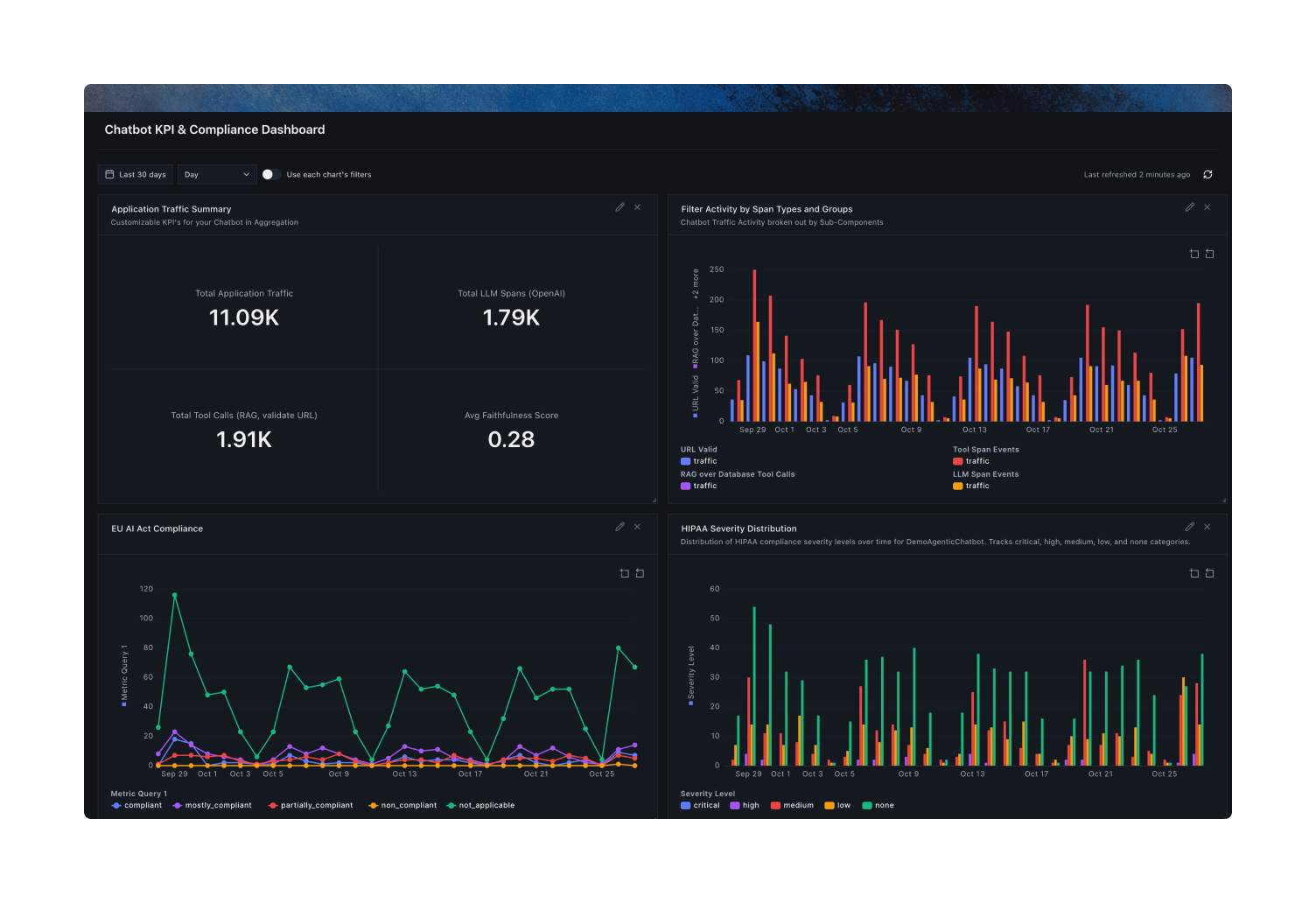
AI Transparency, Audit Trails, and Documentation
Generate comprehensive audit trails that maintain complete accountability across every decision, action, evaluation, and policy outcome.
- Provide audit evidence aligned with enterprise governance and regulatory review requirements (GDPR, HIPAA, NAIC, SR 26-2).
- Maintain comprehensive documentation that enhances accountability and transparency across all AI deployments.
- Support compliance with deep diagnostics that reveal root causes of agent failures and model degradation.
Learn how Integral Ad Science scales transparent and compliant AI products using Fiddler.
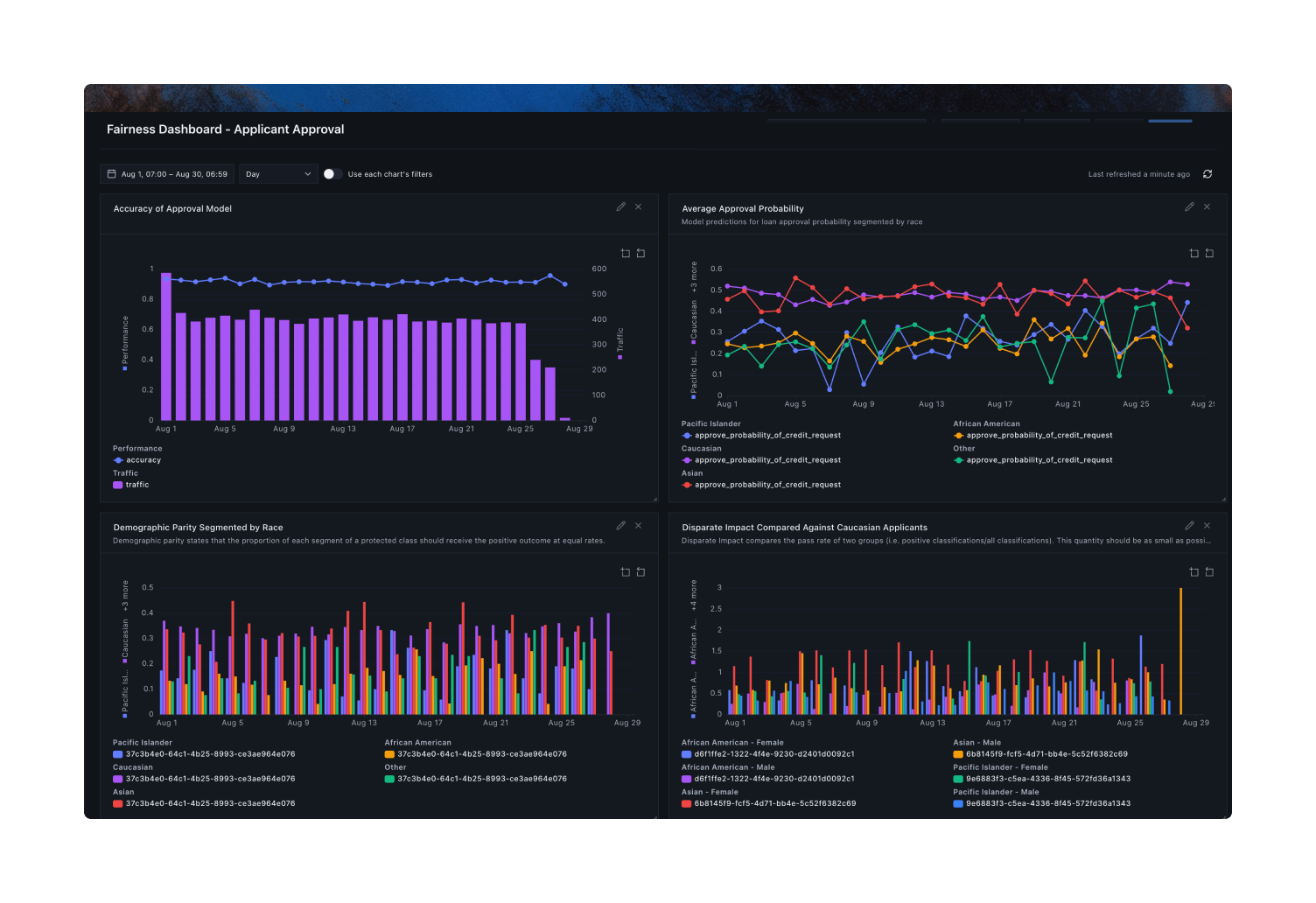
AI Risk Identification and Mitigation
Proactively assess and mitigate risks to prevent negative impacts on end-users and the enterprise.
- Build a robust model risk management (MRM) framework with greater model transparency to meet periodic reviews, including those by the Federal Reserve and OCC’s SR 26-2 guidelines.
- Detect and mitigate risks across agents and predictive models; toxic outputs, PII/PHI leakage, drift, bias, privacy breaches, and unfair outcomes.
- Enforce policies, enterprise rules, and approval workflows with guardrails, and use real-time alerts to trigger immediate action when issues are identified.
Read how to govern coding agents like Claude Code and Codex at scale
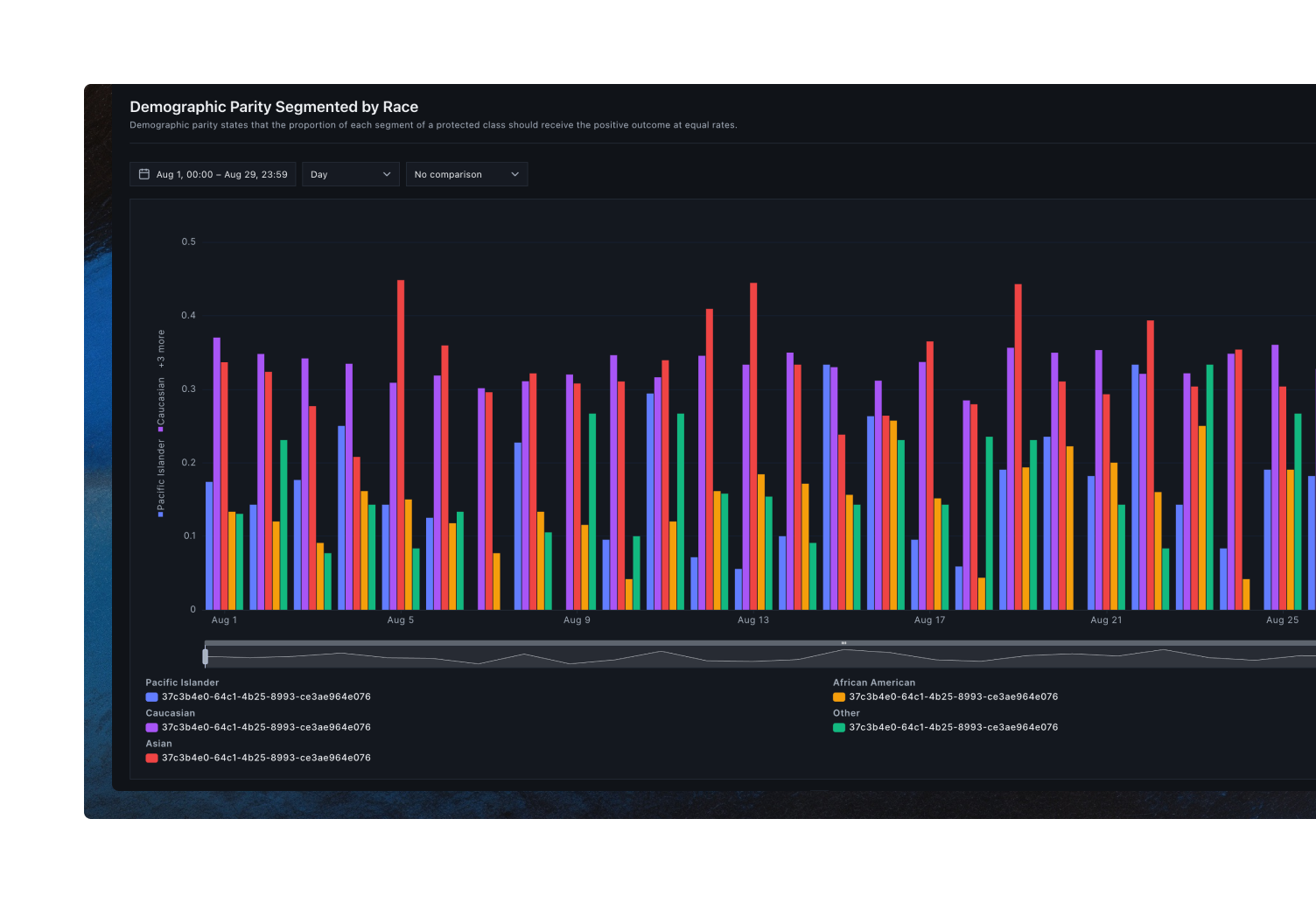
Ethical and Responsible AI Practices
Enforce ethical AI practices that deliver transparent, trustworthy, and equitable outcomes.
- Implement human-in-the-loop approvals for sensitive or high-risk decisions.
- Prevent bias and unfair outcomes across protected attributes to minimize compliance challenges, legal risks, and reputation damage.
- Intervene, pause, reroute, or escalate actions when agent behavior or model predictions deviate from ethical standards.
Read how to govern and control agent behavior as agent adoption increases
Featured Resources
Frequently Asked Questions About AI Goverance
What is AI governance, risk management, and compliance (GRC)?
AI governance, risk management, and compliance (GRC) is how an enterprise oversees the AI systems it runs, identifies and reduces the risks they create, and demonstrates that they meet internal policies and external regulations. For enterprises deploying agents and predictive models, GRC means knowing which AI systems are in use, how they behave, and having the evidence to show they operate within policy.
Why do AI agents need governance?
AI agents make autonomous decisions, call tools, and access data across the business, often faster than any team can review. Governance gives enterprises the oversight to scale agents with confidence: knowing which agents are in use, catching risky behavior early, and keeping the evidence auditors and compliance teams ask for.
What is an AI agent registry?
An AI agent registry is an inventory of the agents an organization runs, recording what each agent is and what it’s built on. In the Fiddler AI Control Plane, Agent Registry lists every agent application in Fiddler, including first-party, third-party, and coding agents, so teams can see their agents, how they’re behaving, and what they’re costing in one view.
How does Fiddler support AI regulatory compliance?
Fiddler records evaluation and policy outcomes with full traceability and generates audit evidence aligned with frameworks and regulations such as GDPR, HIPAA, NAIC, SR 11-7, NIST AI RMF, ISO/IEC 42001, and the EU AI Act. Guardrails run in your own environment, so prompts and responses never leave your infrastructure, which helps teams meet data protection requirements.
How does Fiddler support model risk management (MRM)?
Fiddler gives model risk teams the transparency to meet periodic reviews, including the Federal Reserve and OCC’s SR 11-7 guidance. Teams can monitor predictive models and agents for drift, bias, and performance degradation, run deep diagnostics to find root causes, and create custom reports for MRM and compliance reviews.
How does Fiddler help security and compliance teams manage agent risk?
Fiddler detects risks such as jailbreak attempts, PII/PHI leakage, toxic outputs, and hallucinations, and enforces policy with guardrails powered by Fiddler Centor Models in under 80ms. Alerts for every agent appear side by side on the Fiddler Home page, so security and compliance leaders can see which agents need attention and click into any agent to understand what happened.
How is Fiddler different from other AI governance tools?
Fiddler’s governance runs on the same AI Control Plane that evaluates, monitors, and enforces policy on your agents, so governance is grounded in how agents actually behave. Fiddler covers first-party, third-party, and coding agents alongside predictive models, and Fiddler Centor Models run in your environment, with no external LLM API calls for evaluation.