
Fiddler Enterprise Agentic Observability











Agentic Observability for Autonomous and Reflective Multi-Agent Systems
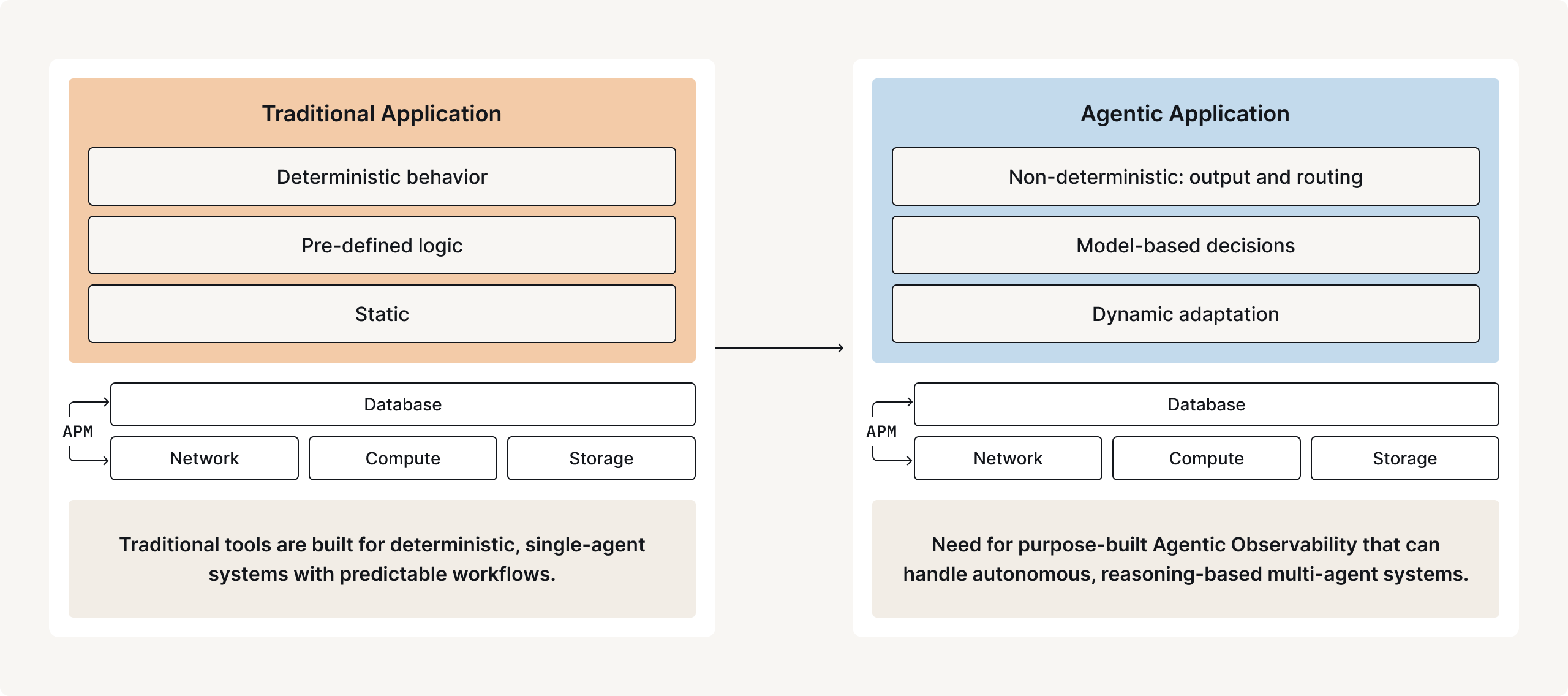
Enterprises are rapidly adopting multi-agent systems, which can introduce exponential complexity. Agentic applications bring autonomy, reasoning, and coordination that break the traditional monitoring framework apart, leaving enterprises without the traceability and interpretability needed to understand why agents make specific decisions and their dependencies.
Fiddler restores visibility, context, and control across the entire agentic lifecycle.
Build. Test. Monitor. Improve.
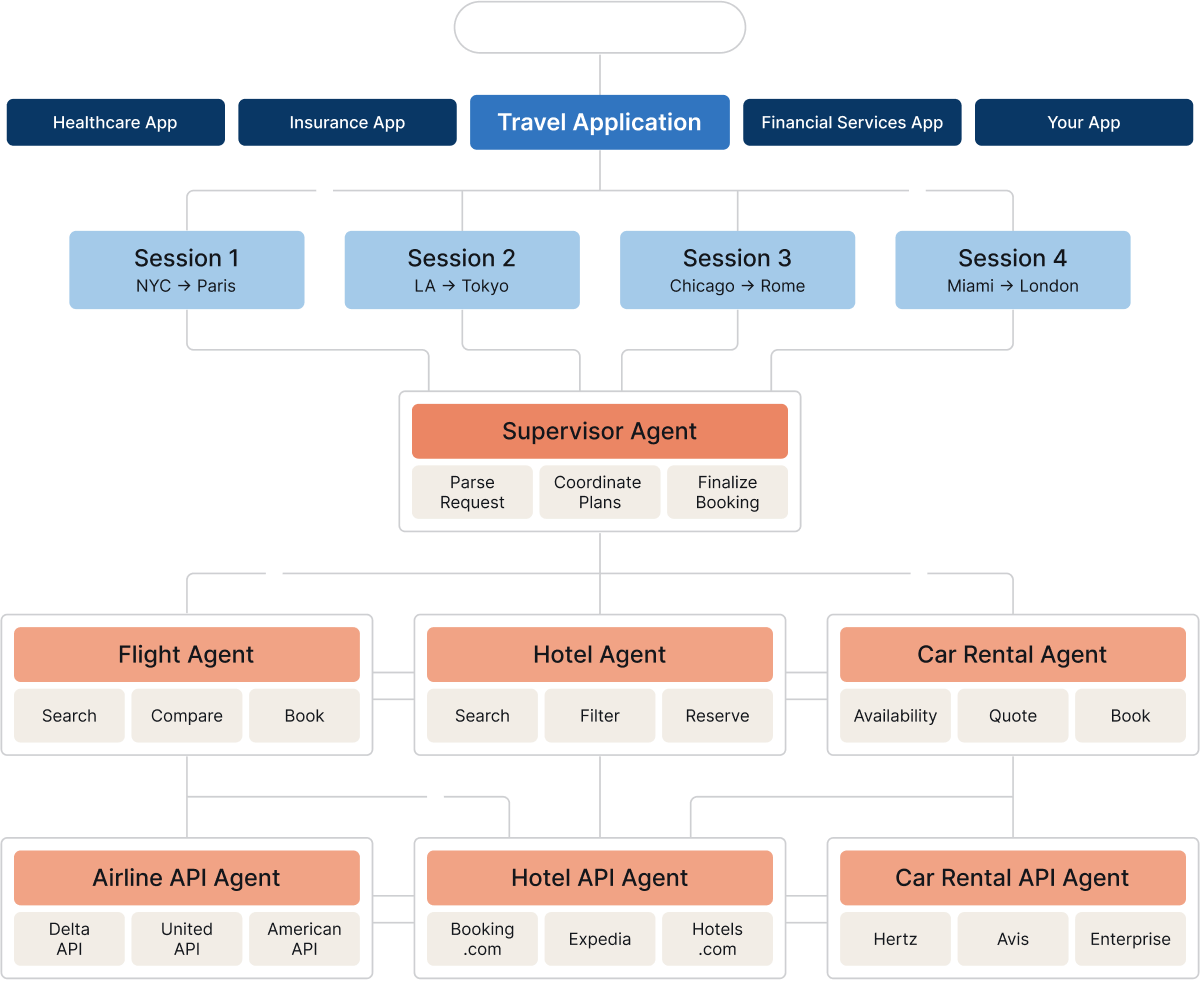
Fiddler delivers end-to-end Agentic Observability, giving enterprises complete visibility across the agentic hierarchy. It observes agents holistically and makes them interpretable, so that you can understand system behaviors, dependencies, and outcomes.
By combining evaluations in development with monitoring in production, Fiddler provides a continuous feedback loop, making agentic systems more reliable, cost-effective, and scalable.
Fiddler is a rich, contextually-aware performance experience that reveals system-wide insights. It is not a one-trace-at-a-time debuggability experience.
Powered by Fiddler Trust Service
Native, not Additive
No External Calls
Enterprise Secure
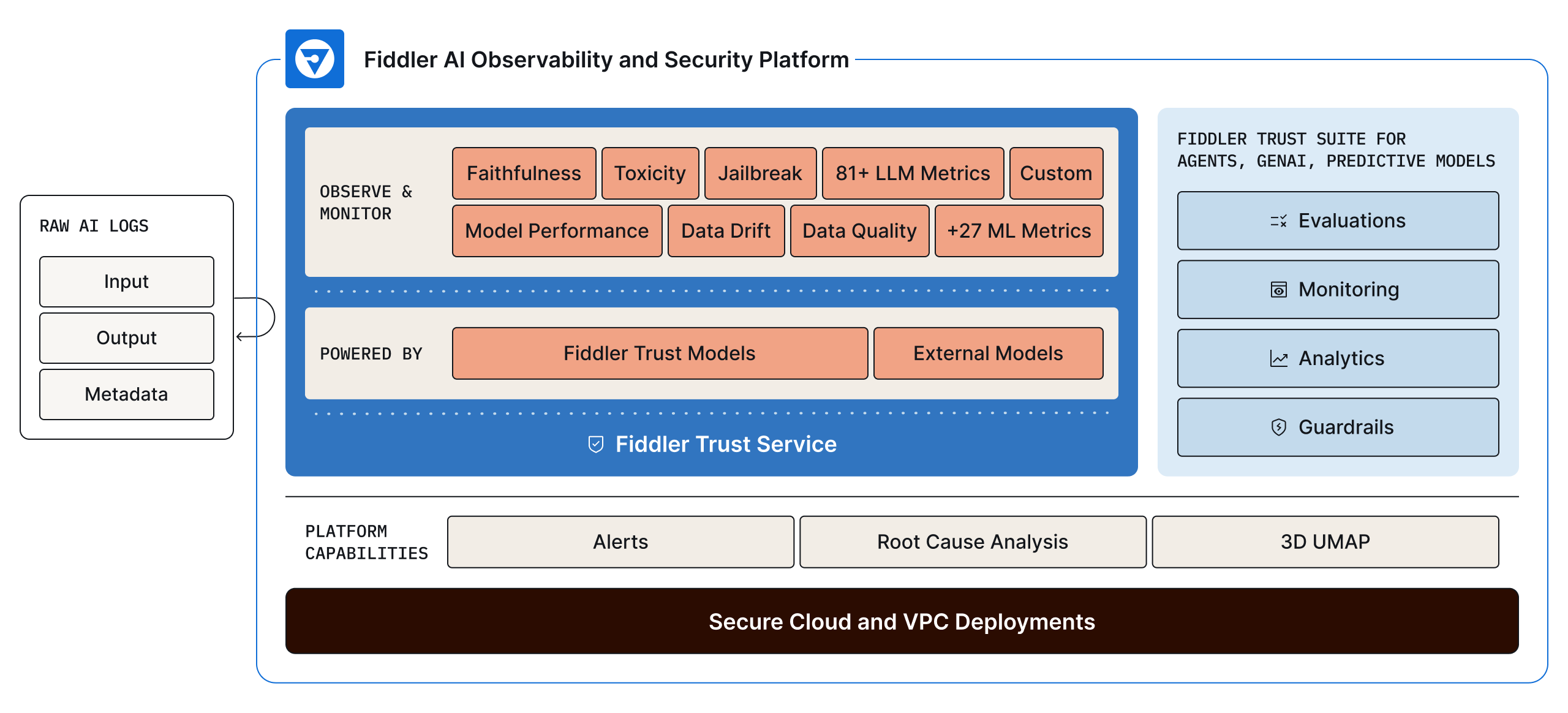
Fiddler Agentic Observability is powered by the Fiddler Trust Service, offering bring-your-own-judge flexibility alongside purpose-built, secure, cost-effective Centor Models (previously known as Trust Models) that run entirely in your environment. These Centor Models score agent and LLM inputs and outputs, enabling real-time monitoring and guardrails without external API calls, so there are no add-on fees or hidden costs.
End-to-End Observability for the Agentic Lifecycle
Build & Test: Launch Reliable Agents
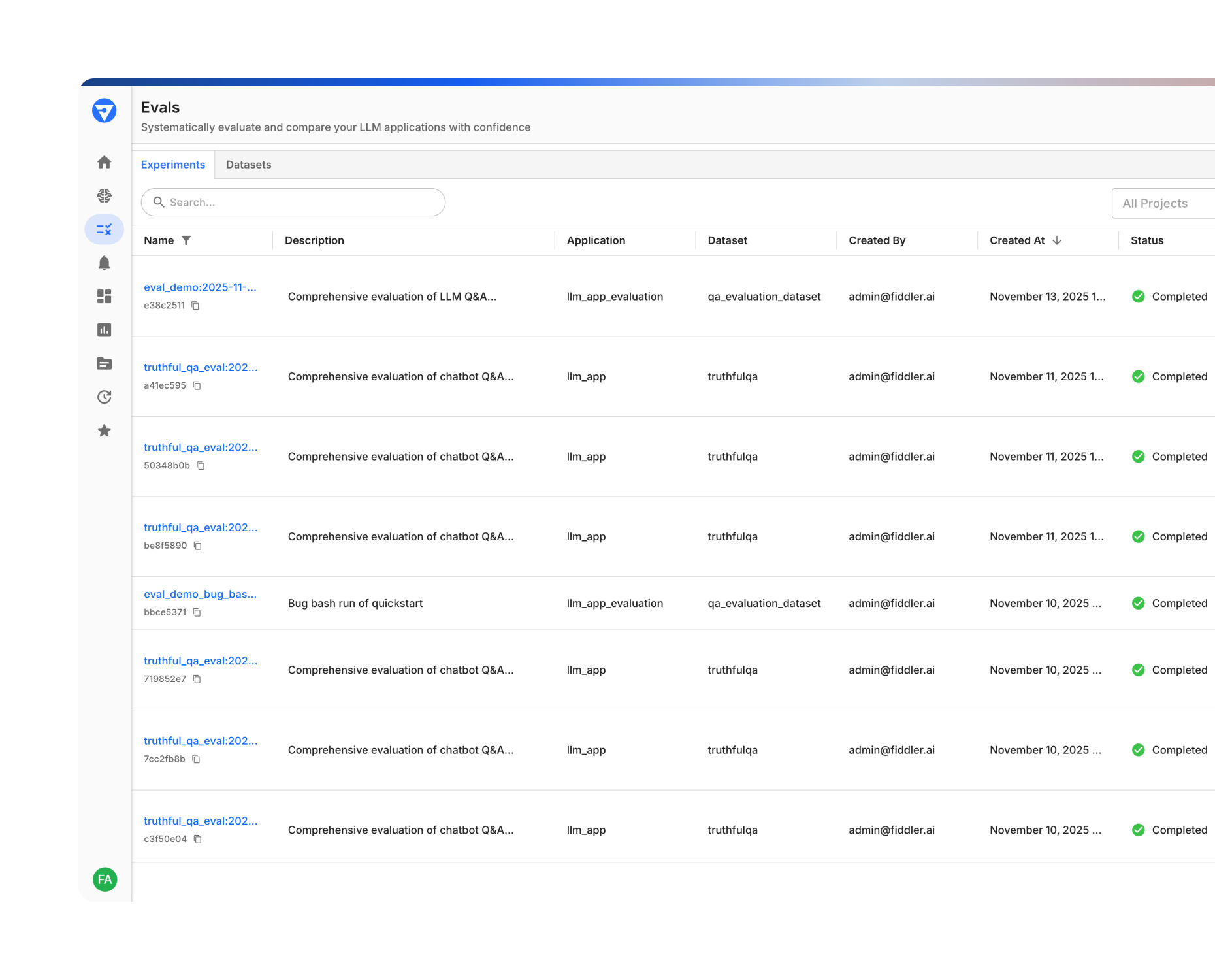
- Evaluate agents with curated golden and challenger datasets to improve performance and behavior.
- Run low-cost experiments with different prompts and responses to reach better outcomes.
- Stress-test edge cases to bolster weaknesses early, reducing risks and harmful incidents after launch.
Monitor: Gain Complete Visibility Across the Agentic Hierarchy
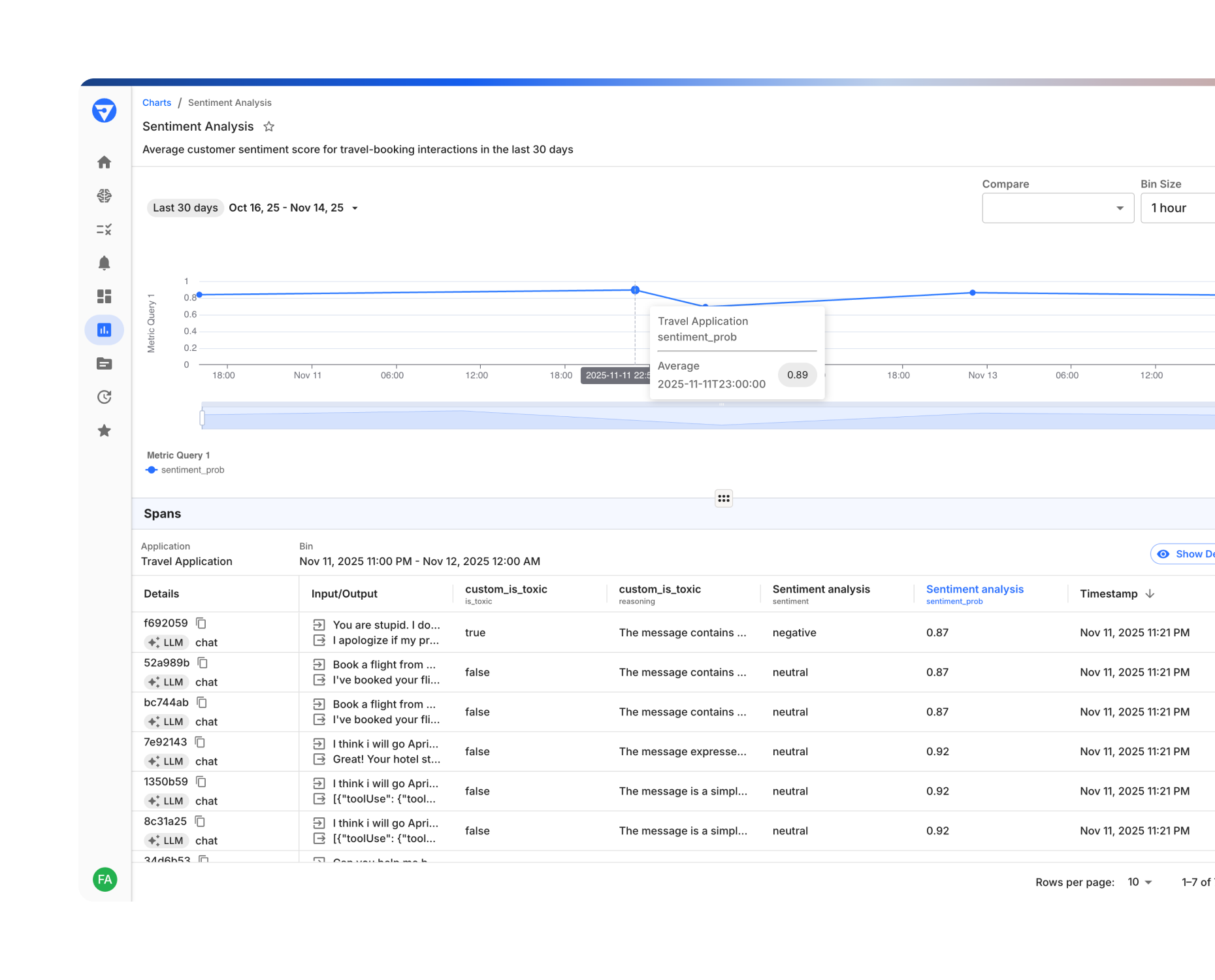
- View aggregate and granular insights in customizable dashboards and reports.
- Receive alerts and monitor key metrics, including hallucination, toxicity, PII/PHI, and jailbreak, and custom KPIs.
- Get visibility up and down the agentic hierarchy to see what happened in any interaction.
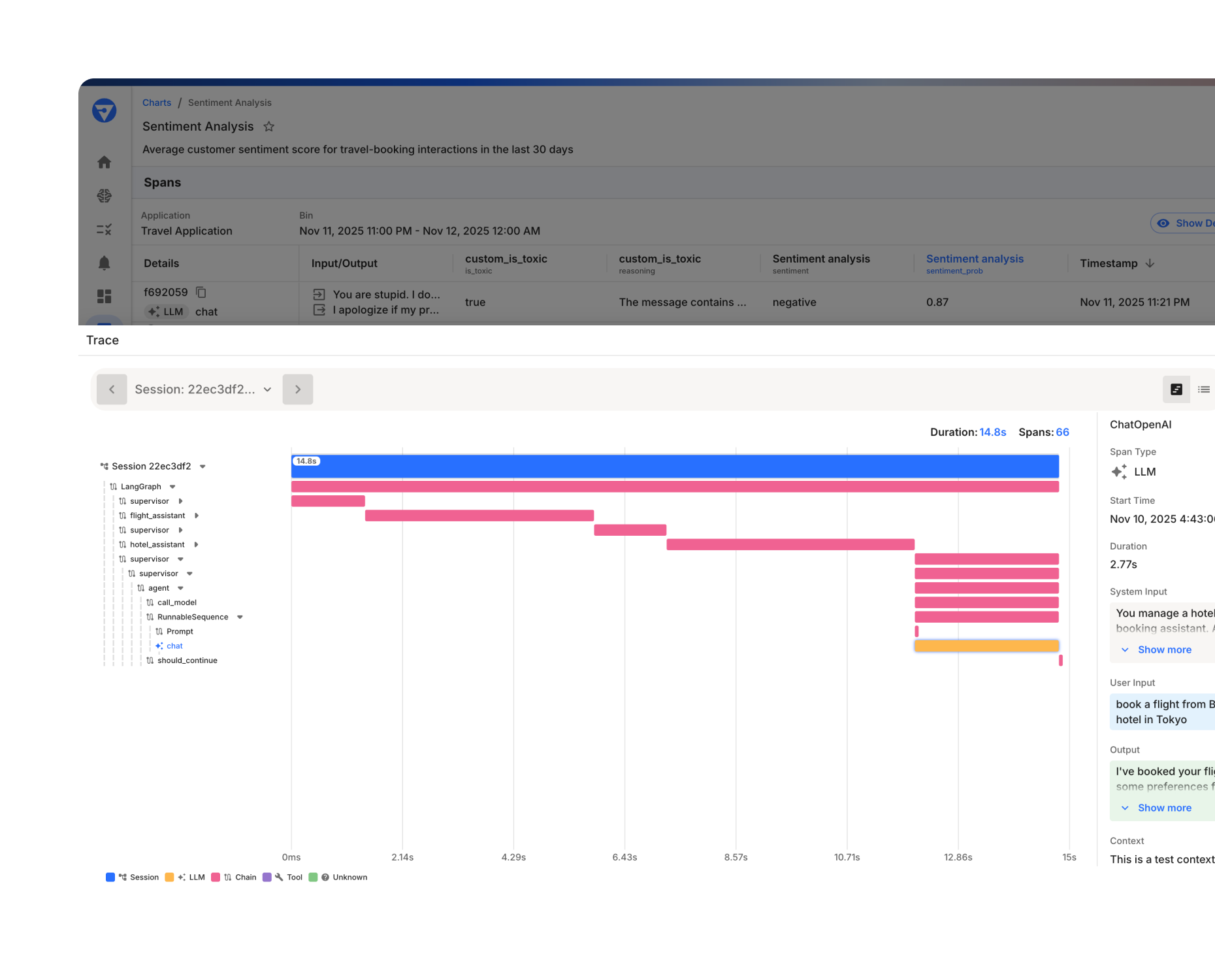
- Track agent reasoning chains, tool calls, and decision paths across sessions.
Analyze & Improve: Understand the ‘Why’ to Optimize Agent Performance
- Perform hierarchical root-cause analysis to pinpoint the failing span with full context, reducing MTTI and MTTR.
- Uncover cross-agent dependencies and bottlenecks that impact system performance.
- Surface critical issues with targeted filtering, sorting, and span attributes to drive improvements.
- Create a feedback loop to improve agent performance, accuracy and safety.
Support for Any Agentic Framework
- The OpenTelemetry (OTEL) integration enables teams to preserve their AI pipeline and be compatible across systems.
- Native support for LangGraph, Amazon Bedrock, AWS Strands Agents, Google ADK, and other frameworks of choice, along with the tools in your agentic tech stack.




Featured Resources
Frequently Asked Questions About Agentic Observability
What is agentic observability?
Agentic observability is the ability to evaluate, monitor, analyze, and improve the behavior of autonomous agents across their lifecycle. It provides hierarchical visibility across applications, sessions, agents, traces, and spans. This enables enterprises to understand decision-making, coordination, and performance within AI agentic workflows from pre-production to production.
What is the difference between deterministic and agentic?
Deterministic systems follow fixed rules and produce predictable outcomes. In contrast, agentic systems are autonomous and capable of making decisions based on reasoning, context, or learned behavior. As a result, their outputs are dynamic and less predictable.
What is the difference between autonomous and agentic?
Autonomous systems can operate independently without human input. Agentic systems build on this capability by reasoning, planning, adapting to new situations, and collaborating with other agents. While all agentic systems are autonomous, not all autonomous systems exhibit agentic behavior.
What are examples of agentic behavior?
Examples of agentic behavior include reasoning through complex problems, adjusting plans based on context, delegating tasks to other agents, and reflecting on previous actions to improve future decisions. These behaviors are often found in large language model agents that manage workflows, book travel, or solve software issues.
What is the meaning of agentic retrieval?
Agentic retrieval refers to an AI agent’s ability to independently find and use relevant information from external tools, documents, or databases. This capability supports the agent’s goals by allowing it to reason more effectively within its current context. It is essential in systems using retrieval-augmented generation.